Mushrooms or Fungus Growing on an Old Stump? What It Signals for the Yard
Quick Answer: Mushrooms or shelf-like growths on a tree stump are fruiting bodies — visible proof that a wood-decay fungus is already established inside the wood, not a sign that decay is just starting. Some types, like the honey-colored clusters tied to Armillaria (honey fungus), can spread root-to-root and threaten nearby living trees. Others, like flat bracket fungi (conks), mostly confirm that the stump's internal wood has been breaking down for a while. Either way, a softening, fungus-colonized stump becomes an easier target for carpenter ants and wood-boring beetles, and it stays that way until the wood and root mass are gone. Grinding the stump and its major roots removes the food source and interrupts the spread before it reaches anything else in the yard.
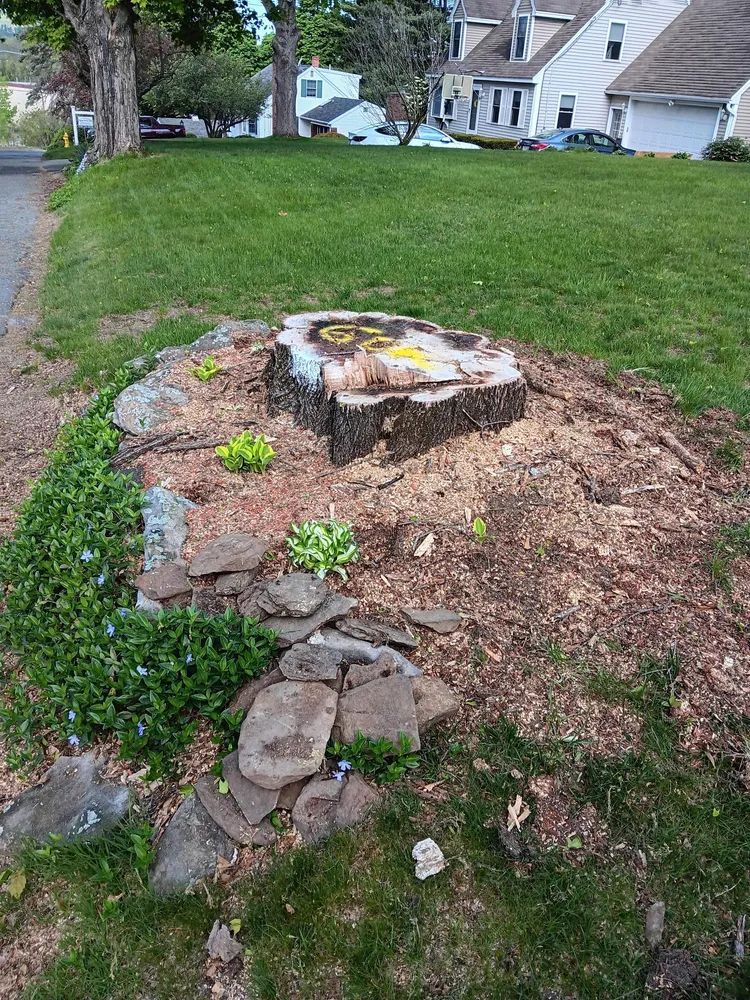
You walk out to the side yard after a few days of rain and there they are — a cluster of tan, honey-colored mushrooms pushing up right at the base of the stump you've been meaning to deal with since the tree came down last year. Or maybe it's not mushrooms at all, but a shelf of hard, ridged fungus growing flat against the side of the wood, layered like a stack of pancakes. Either way, your first instinct is probably right: something is going on inside that stump, and it's been going on longer than the fungus you can actually see.
Fungus doesn't show up the moment a stump starts to rot. It shows up once the rot is advanced enough to support a fruiting body — the mushroom or bracket is the fungus's way of releasing spores after it has already colonized a meaningful amount of wood underneath. What you're looking at above ground is the tip of something that's been working below ground, sometimes for a full season or more.
Why the Mushroom Only Shows Up After the Damage Is Done
A fungus spends most of its life as mycelium — thin, thread-like tissue that spreads through wood and soil, digesting cellulose and lignin as it goes. That stage is invisible unless you cut into the wood or peel back bark to look for it. The mushroom, bracket, or shelf you see on the surface is a fruiting structure, built only when the fungus has enough energy reserves to reproduce. By the time it appears, the internal wood is already compromised in that area.
This matters for how you read what's happening in your yard. A single small mushroom doesn't necessarily mean the whole stump is hollow, but a cluster returning in the same spot year after year, or growths appearing on multiple sides of the stump, points to decay that has spread through a large share of the wood and likely into the major roots below the soil line.
The Two Fungus Types Showing Up Most in North-Central Massachusetts Yards
Not all fungus on a stump behaves the same way, and the difference matters for what you do next.
Honey-colored mushroom clusters (honey fungus). These grow in tight groups directly at the base of the stump or from a buried root nearby, usually after a stretch of damp fall weather. They're tan to honey-brown with a thin ring partway down the stem. If you peel back bark near the soil line, you may find thin, white, fan-shaped fungal tissue underneath, or dark, shoelace-like strands running through the soil and along root surfaces. Those strands are how the fungus travels — root to root, tree to tree — which is the detail that separates this type from most others. It isn't limited to the dead stump. It can move into the root systems of healthy hardwoods growing nearby, especially maples and oaks that are already stressed from drought, root damage, or heavy clay and rocky soil that holds water against the root collar.
Bracket fungi and conks (shelf fungus). These are the flat, semicircular, sometimes woody growths that stick straight out from the side of a stump or trunk, often stacked in tiers. Some are soft and shelf-like when fresh — bright orange-yellow undersides are common on one type that shows up on oak and maple stumps in this region — while others harden into a tough, almost woody texture over a season or two. Bracket fungi generally indicate heart rot: decay concentrated in the older, central wood of the stump and root crown. Unlike honey fungus, most bracket-forming species aren't aggressively moving root to root toward living trees, but their presence still confirms that a meaningful column of internal decay runs through that stump — sometimes extending several feet through the wood in either direction from where the fungus is fruiting.
Both types can technically produce a mushroom on the same piece of dead wood in different seasons, so identification by the fruiting body alone has limits. What matters more for a homeowner is the pattern: is it happening on an isolated dead stump, or is it starting to show up at the base of a living tree nearby?
That distinction is the whole ballgame. Everything below hangs on it.
Why It Shows Up in Waves After Wet Weather
If you've noticed the mushrooms seem to appear overnight after a rainstorm, that's not a coincidence. Wood-decay fungi need consistent moisture to fruit, and New England's pattern of humid late summers followed by cool, damp fall stretches creates ideal conditions. A stump that looked fungus-free in the dry heat of July can produce a full cluster of mushrooms by the second week of October once overnight temperatures drop and the ground stays wet for days at a time. Rocky, poorly draining soil common across Worcester County and southern New Hampshire holds that moisture against the stump and root collar even longer, which is part of why fungus tends to reappear at the same stumps season after season rather than showing up once and disappearing for good.
Tip:
If you want a rough read on how far decay has progressed before deciding what to do, press a screwdriver or similar tool into the stump at a few different spots around its base. Wood that's still solid resists the pressure. Wood that's gone soft, spongy, or crumbly under fungus growth is usually well into decay, and that softness typically extends into the larger roots below the surface, not just the visible stump.
What a Decaying, Fungus-Covered Stump Attracts Next
A stump with active wood-decay fungus isn't just softer — it's more attractive to insects that specifically target dead, moisture-softened wood. Carpenter ants are the most common example in this region. They don't eat wood the way termites do, but they excavate galleries through it to build nests, and decayed, fungus-softened wood is far easier to hollow out than sound timber. A stump that's been colonized by fungus for a season or two often becomes a satellite carpenter ant colony, and those colonies routinely send workers out to forage — sometimes toward a woodpile, a deck, or the siding of a house within a few hundred feet. Wood-boring beetles follow a similar pattern, laying eggs in the softened outer layers where their larvae can tunnel with less resistance.
None of this means every mushroom-covered stump is an active infestation waiting to happen. Plenty of decaying stumps sit for years hosting nothing more than the fungus itself. But the softening process that makes a stump easy for fungus to break down is the same process that makes it appealing real estate for wood-boring insects. The two show up together often enough to pay attention.
The Difference Between a Cosmetic Problem and a Spreading One
Slow down here and separate what you're actually looking at. A bracket fungus on an isolated stump, away from other trees, is mostly a signal about that one piece of wood — its internal structure has been breaking down for a while, and left alone it will keep breaking down until the stump is essentially soil. That's a slow, largely self-contained process.
Honey fungus at the base of a stump that sits within root distance of a living, healthy tree is a different situation. Because it spreads through direct root contact and those dark rhizomorph strands in the soil, it can move from the dead stump into a nearby tree's root system without ever producing a visible mushroom on the living tree until the decline is already underway — thinning leaves, dieback in the upper canopy, bark that looks flattened or cracked near the base. By the time those above-ground symptoms show up on the healthy tree, the infection has usually had a head start of months or years underground.
Warning: If mushroom clusters matching the honey-colored, ringed description keep returning at the base of a dead stump located within roughly 15 to 20 feet of a living tree, treat it as more than a yard nuisance. That's close enough for root-to-root contact to be a realistic path of spread, particularly for maples, oaks, and other hardwoods already under stress from drought, construction damage, or waterlogged soil. Watching the stump without addressing the root system underneath it gives the fungus more time to reach a tree you'd actually miss if it declined.
Why Removing the Stump Solves More Than the Eyesore
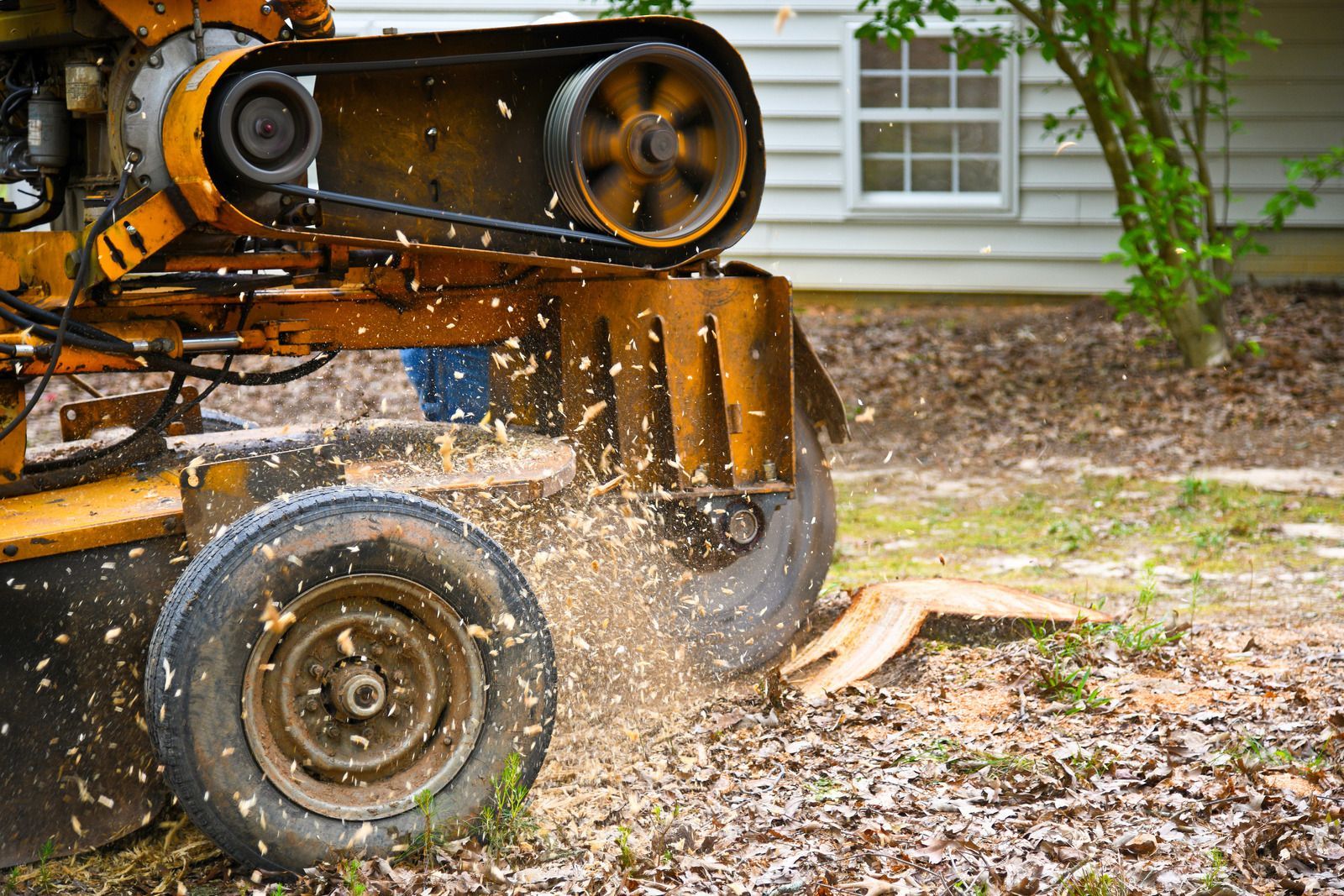
Cutting a stump flush to the ground or covering it with mulch doesn't touch what's happening below the soil line, which is where the decay and any fungal spread are actually taking place. Grinding a stump down and working through its major structural roots removes the wood mass that's feeding the fungus in the first place — no substrate, no continued colony. It also opens the remaining wood fragments to natural competition: smaller wood pieces break down faster and get colonized by a much broader range of organisms in the soil, which tends to crowd out an aggressive fungus like honey fungus far more effectively than a solid, intact root system ever would. For a stump sitting close to other trees, taking out the roots along with the visible stump is the part that actually interrupts a root-to-root spread path, not just the part that improves how the yard looks.
And it eliminates the softened wood mass that's attracting carpenter ants and wood-boring beetles in the first place. Once the stump and root flare are ground down and the debris is cleared, there's no more easy target sitting at ground level pulling insect activity toward your house, shed, or woodpile.
Frequently Asked Questions
Does a mushroom on my stump mean the fungus will spread to my lawn?
Most wood-decay fungi need woody material to establish and won't colonize turfgrass roots directly. The exception is damp soil around the stump hosting rhizomorphs or leftover root fragments after removal, so clearing root mass matters.
Can I just pull the mushrooms off and stop the problem?
Removing the mushrooms only takes away that season's spore-release structure. The mycelium doing the decay work stays inside the wood and roots below the soil, so the fungus keeps growing and will fruit again soon.
How can I tell honey fungus apart from other mushrooms on a stump?
Look for tight clusters of honey-brown mushrooms with a thin ring around the stem, near the stump's base or a nearby root. Checking for white fungal tissue or dark strands in the soil is reliable.
Is it safe to have kids or pets around a stump with mushrooms growing on it?
The bigger concern is accidental ingestion, since some wild mushrooms are toxic and appearance isn't a reliable way to tell edible from harmful. Keeping curious kids and pets away from any mushroom cluster is wise.
Will grinding stir up spores and make the fungus spread faster?
Grinding breaks the stump and roots into smaller chips, speeding decomposition rather than spreading the fungus. The real risk is leaving large infected root sections intact, where they remain a long-term food source for roots.
Does this only happen with old, long-dead stumps, or can a recently cut stump show fungus too?
A freshly cut stump can show fungus fast if the tree carried internal decay or root disease before removal, common with trees removed for decline or hazard. Fruiting bodies can appear within the first year.
What Fungus Growth Means for Your Yard
Fungus growing from an old stump is usually evidence that decay is already well established inside the wood and may extend into the larger roots below ground. While some bracket fungi mainly signal slow decomposition of an isolated stump, honey fungus can be more concerning when living trees are nearby because it may spread through root contact. Understanding the type and location of the growth helps determine whether the stump is simply breaking down or creating a larger risk for the surrounding yard.
For homeowners in Westminster, MA, removing a fungus-colonized stump can also reduce the amount of decaying wood available to carpenter ants and wood-boring beetles. Big Beaver Stump Grinding
brings 20
years of experience to stump removal work, helping address the visible stump as well as the root mass contributing to continued decay. Once the remaining wood is removed and the area is allowed to recover, the yard is left with less fungal food source and fewer conditions supporting ongoing decomposition or insect activity.