Carpenter Ants or Termites Near an Old Stump? Why It's a Magnet for Pests
Quick Answer: A decaying stump left in the yard is close to ideal habitat for both carpenter ants and subterranean termites because the wood is already soft, moist, and easier to hollow out than sound lumber. Carpenter ants tend to show up first, nesting in the damp core of the stump and pushing out small piles of debris that look like coarse sawdust near the base. Termites work differently, building mud tubes along the stump and soil line and feeding on the cellulose inside without leaving visible debris on top. Either pest can use a stump within 30 to 50 feet of a house as a staging point before moving toward a woodpile, deck, or the structure itself. The stump and its root mass are the actual food source and shelter, so grinding them out removes what both pests are after rather than treating only the signs above ground.
You're out refilling the bird feeder near the old stump at the edge of the yard when you notice it. A small pile of what looks like coarse sawdust sits against the base, and a line of dark ants is working in and out of a crack in the wood. Or maybe it's later in spring, right around dusk, and a short burst of winged insects lifts off that same spot before scattering into the grass. Either way, the stump you've been meaning to deal with since last fall just turned into something with legs.
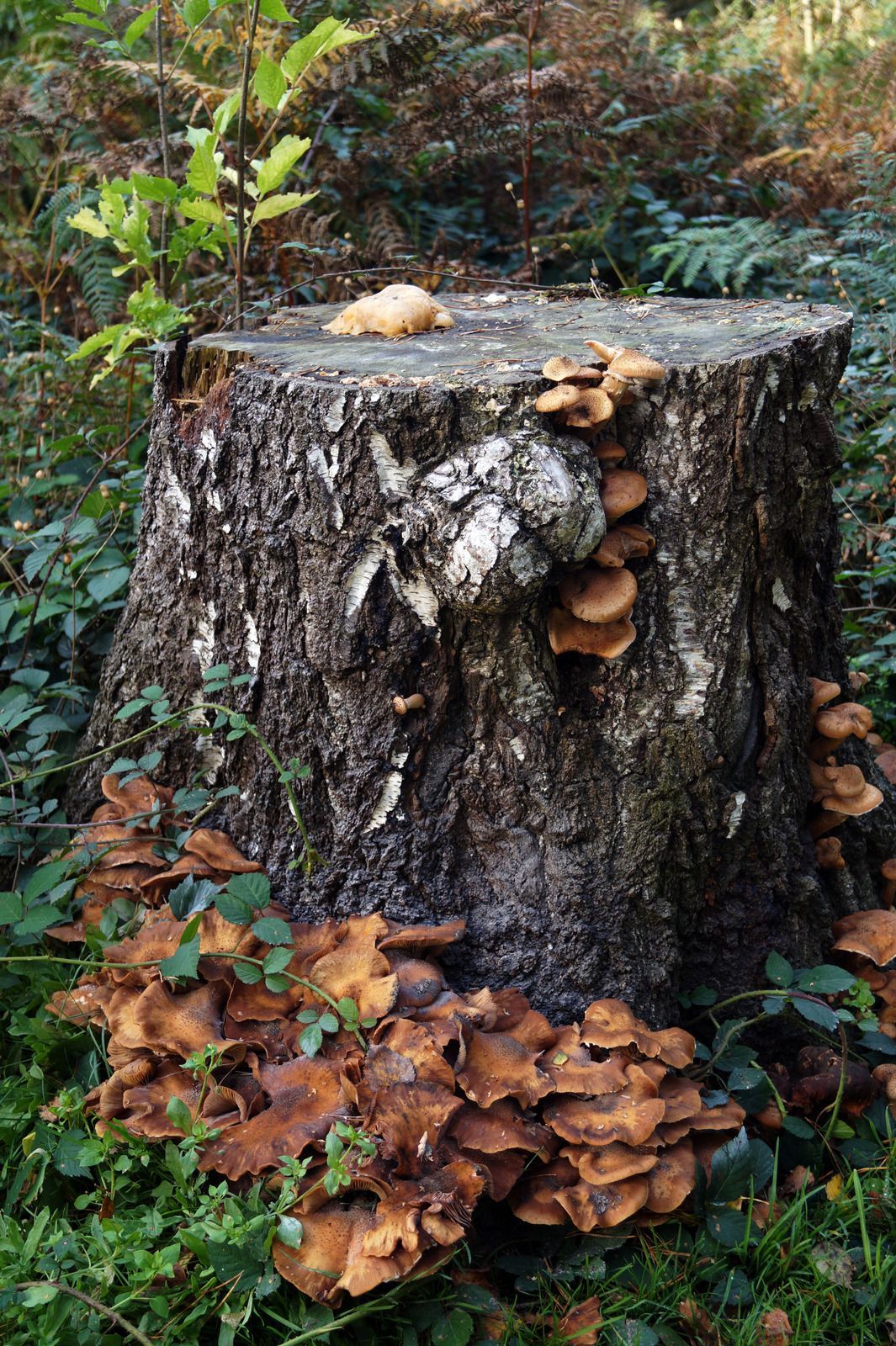
Pest activity clustered around a stump is rarely a coincidence. An old stump breaks down from the inside out, and that breakdown creates exactly the conditions carpenter ants and termites look for: wood gone soft with moisture, shaded from direct sun, sitting at ground level where it meets damp soil. Sound, dry lumber framed into your house is a much harder target for either pest. A rotting stump is not.
What Makes a Decaying Stump So Appealing to Ants and Termites
When a tree comes down, the stump left behind starts losing its natural defenses right away. Living wood carries moisture and compounds that resist insects and decay while the tree is alive. Once the tree is cut, those defenses stop working, and fungi and bacteria begin breaking the wood down from the inside. That process softens the fibers, and softer wood takes far less effort for an insect to tunnel through than solid, healthy timber.
Ground contact makes this worse. A stump sits directly against soil that holds moisture, especially through a New England fall and spring when the ground stays damp for weeks at a stretch. That constant contact keeps the base of the stump wetter than almost any part of a house, which is close to the moisture level carpenter ants favor for nesting and termites need to survive. None of the wood inside your home carries any of the natural protection a living tree has. A stump has none of it from the day the tree comes down.
Carpenter Ants or Termites: How to Tell Which One You're Looking At
The two pests behave differently enough that a close look at the stump usually tells you which one you're dealing with.
Carpenter ants do not eat wood. They chew through it to carve out smooth, clean galleries for a nest, and they push the debris out through small openings as they go. That debris looks like coarse sawdust, sometimes mixed with small fragments of dead insects, and it collects in a small pile near an entry hole or crack in the stump. The ants themselves run large, up to about half an inch long, dark brown or black, and move quickly across the surface of the wood or the surrounding soil, especially in the evening.
Termites
work out of sight. Subterranean termites, the type common across Massachusetts and New Hampshire, travel between soil and wood through mud tubes about the width of a pencil, built along the surface of the stump or up from the ground. You will rarely see the termites themselves unless you break open a section of damp wood and find pale, soft bodied insects clustered inside. The stronger signal is usually a swarm: a short burst of winged termites emerging on a warm, often humid day in spring, followed by discarded wings left scattered on the ground or on a nearby porch or window sill.
Why the Stump Behaves Differently From the Rest of the Yard
A stump is not an isolated problem sitting off to the side of the property. Its root system extends outward underground, sometimes 10 feet or more depending on the tree's age and species, and those roots decay along the same timeline as the stump itself. For termites, that root network works as a built in tunnel system, letting a colony move through soil and wood without ever crossing open ground where you would notice it. For carpenter ants, an established stump colony regularly sends worker ants out to forage, and those workers do not stop at the edge of the yard. They follow moisture and wood back toward a deck, a woodpile stacked against the house, or a section of siding that stays damp longer than the rest of the structure.
Tip:
The clearest early warning for termites is often not on the stump itself but near the house. Check porch lights, window sills, and any spot near an outdoor fixture on a warm evening in April or May for small piles of thin, papery wings shed after a swarm. Finding them there, even without spotting a single termite on the stump, means a colony somewhere on the property already swarmed and some of it landed closer to the house than you would like.
How Close Is Close Enough to Matter
Distance is not a guarantee either way, but it does change the odds. Carpenter ant colonies nesting in a stump commonly forage across a range measured in the hundreds of feet, and a stump sitting within 50 feet of the house puts that colony well inside typical foraging distance for a satellite nest to form somewhere on the structure, usually in a spot that stays damp: a leaking gutter corner, an exterior wall behind a bathroom, or framing around a deck ledger board.
Subterranean termite colonies tend to stay closer to their food source, often working within 20 to 30 feet of the original stump or root mass, though an established colony can extend tunnels considerably farther when conditions favor it. A stump sitting close to the foundation, a deck, or a fence line built from untreated wood gives either pest a much shorter path to something more valuable than the stump itself.
Why North Central Massachusetts and Southern New Hampshire Conditions Make This Worse
The soil across Westminster and the surrounding towns does not drain the way sandy or loamy soil does elsewhere. Rocky ground heavy with clay holds water against a stump's base long after a storm has passed, and that extended dampness is what keeps decay moving through hardwood stumps like oak and maple faster than it would in a drier climate. Add a New England winter's freeze and thaw cycle, which physically cracks and loosens wood fibers each time water inside the stump freezes and expands, and you get a stump that softens on a faster timeline than most property owners expect. By the second or third year after a tree comes down, an oak or maple stump in this region is often soft enough at the core to make an easy target, well before it looks obviously rotted from the outside.
Cutting It Flush or Covering It Does Not Remove the Draw
Cutting a stump down flush with the ground or piling mulch over it changes how it looks without changing what is happening underneath. The root mass, often the larger share of the decaying wood, stays fully intact below the surface. Moisture still collects at ground level. Fungal decay keeps softening the wood on the same schedule it would have followed anyway. All that changes is that you can no longer see the stump, which makes it easier to forget an active pest problem is still developing a few inches under a layer of mulch or grass.
Warning: Spraying a store bought insecticide on the stump or around its base does not reach a termite colony that has already tunneled from the stump toward the house, and it can scatter a carpenter ant colony into smaller satellite nests instead of eliminating it, some of which relocate into a wall void or attic framing rather than dying off. If swarmers, mud tubes, or ant trails are already showing up on or near the house itself rather than just the stump, that calls for a licensed pest inspection of the structure before the stump becomes the next project. Treating only the yard while activity has already reached the house leaves the bigger problem sitting untouched.
What Removing the Stump and Root Mass Actually Changes
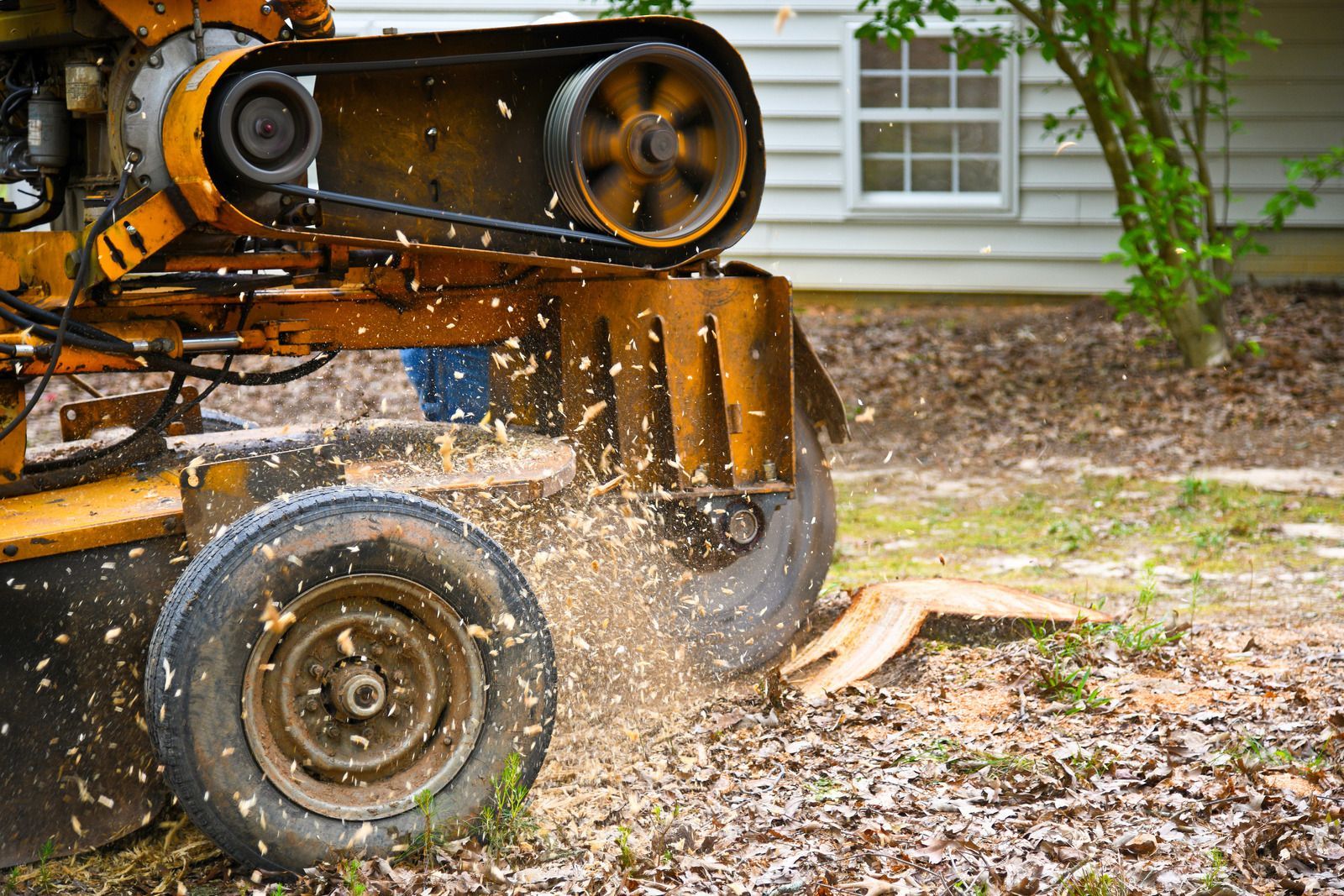
Grinding a stump down and working through its major structural roots removes the actual food source and shelter that carpenter ants and termites are using, not just the visible piece of wood above the soil line. Once the wood mass is gone, there is no more damp, decaying core for a colony to keep expanding into, and any satellite activity that had started moving toward the house loses its staging point back in the yard. Root removal matters as much as the stump itself here, since a root system left in the ground keeps decaying and holding moisture on its own timeline, giving either pest a reason to stay in the area even after the visible stump is gone.
Frequently Asked Questions
How can I tell if it's carpenter ants or termites near my stump?
Check what is left behind. Carpenter ants push out piles of coarse sawdust-like debris near entry holes, while termites build mud tubes along the stump or up from the soil and swarm in spring.
Does finding carpenter ants or termites near a stump mean my house is at risk?
Not automatically, but risk rises the closer the stump sits to the structure. Within 30 to 50 feet, check exterior walls, deck framing, and damp corners for the same signs as a precaution.
Can I treat the stump myself with a store bought insecticide to keep the pests away?
Surface sprays do not reach termites tunneling underground and can scatter ant colonies into hidden satellite nests. If activity is near the house, a licensed pest inspection is the more reliable step.
How far will carpenter ants actually travel from a stump to reach a house?
Workers from an established colony commonly forage a few hundred feet for food and moisture. A stump within 50 feet puts the house well inside that range, and a damp sill plate or small gap is enough.
Does grinding a stump get rid of ants or termites already living inside it?
Grinding removes the food source and moist core a colony depends on, ending the habitat in that spot. It does not replace pest control if a colony has already moved into the house.
What time of year are carpenter ants and termites most active around an old stump?
Termite swarms typically appear on warm, still spring days, often after rain. Carpenter ants stay active from spring through early fall, slowing once nights turn cold in October and November.
Removing the Stump Removes What Pests Want
An old stump at the edge of the yard is never neutral. It is either finishing its decay on its own timeline or feeding a colony of carpenter ants or termites that has found a shorter path toward the house. The soft, damp wood and the spreading root mass are what draw both pests in, so covering or cutting the stump flush changes how it looks without changing what lies underneath. Once the wood and roots are gone, the colony loses its base.
At Big Beaver Stump Grinding, we have spent 20
years
removing stumps and root masses in Westminster, Massachusetts, and the nearby towns, so we know how quickly a damp oak or maple stump can become a staging point. Catching it early keeps the problem in the yard and away from decks, woodpiles, and foundations. Pair that with a careful look at the exterior of your house each spring, and you stay well ahead of swarm season. A cleared yard simply gives pests far less to work with.