Old Stump Sprouting Suckers and New Shoots? Why Grinding Stops the Regrowth
Quick Answer: A stump keeps sprouting suckers and shoots because the tree is not actually dead. Living buds at the root collar, fed by an intact root system full of stored energy, break dormancy after the trunk is cut and push up fresh growth. Snipping those shoots only triggers more, since the buds and the fuel behind them stay in the ground. Stump grinding stops the regrowth by chewing the stump and root collar six to twelve inches below the soil line, destroying the exact tissue where sprouts originate. Without that living wood, the leftover roots have no growing point to work from and simply decay.
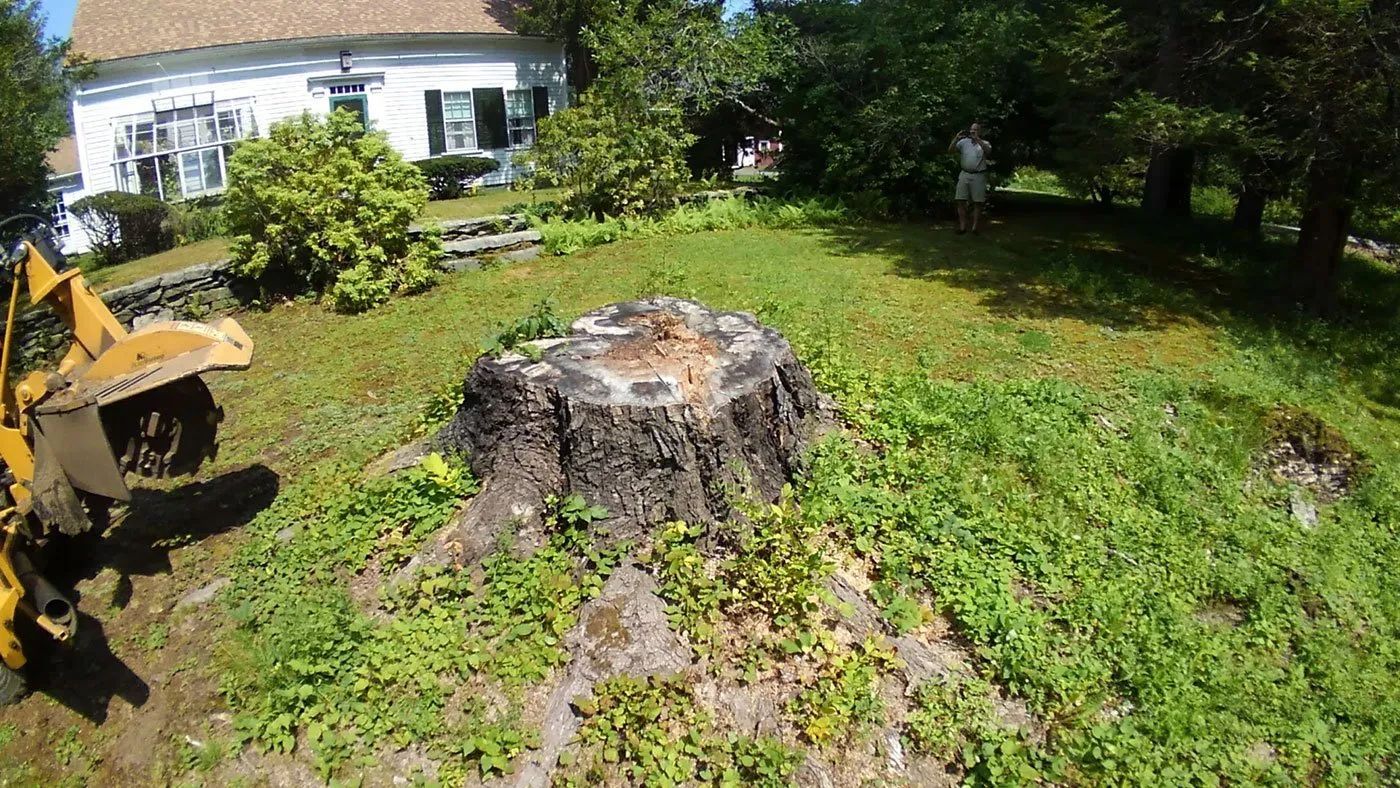
You cut the tree down last fall, hauled off the wood, and figured the stump would just sit there and rot. Then spring arrived and a ring of skinny green shoots pushed up around the base, some of them knee-high by June. You mow them off. Two weeks later they are back, thicker than before, and now there are more of them spreading a few feet out into the lawn. It feels like the tree refuses to accept that it is gone.
That reaction is not stubbornness on the tree's part, and it is not something you did wrong when you cut it. A stump throwing up suckers and shoots is doing exactly what a lot of hardwoods are built to do after the top is removed. Understanding why it happens is the key to understanding why cutting the shoots never wins, and why grinding the stump does. In the hardwood-heavy woods of north-central Massachusetts and southern New Hampshire, this is one of the most common stump problems a property owner runs into.
Why a Cut Stump Sends Up New Growth in the First Place
Start with what the tree still has. When a tree gets felled, the trunk and canopy are gone, but the root system stays right where it was, and it is enormous. Roots commonly reach four to twelve feet out from where the trunk stood, and they are loaded with the sugars and starches the tree spent years storing. Cutting the top does not touch that reserve. To the root system, losing the trunk reads as a severe injury, and the response is to rebuild.
The growth you see comes from very specific spots. Along the root collar, the transition zone where the trunk meets the roots, sit suppressed dormant buds that formed when the tree was young and have been sitting quietly beneath the bark ever since. Penn State Extension describes these as buds at the root collar that stay dormant until injury or extreme stress prompts them to become active. Once the trunk is cut, that stress signal fires, the buds break dormancy, and they push up as sprouts. Foresters call the whole process coppicing, and it is the same mechanism people once used on purpose to harvest firewood from the same stumps for generations.
The stored energy is what makes them so vigorous. A seedling has to start from nothing. A stump sprout, by contrast, taps straight into the parent tree's established root system and its accumulated reserves. The U.S. Forest Service plant physiologist Kevin Smith, quoted in Northern Woodlands, compared it to starting life with a huge trust fund. That is why the shoots come up so fast and so thick, and why they outpace anything you try to plant nearby. They are not building a root system as they grow; they already have one waiting underground.
Why Some Stumps Sprout Like Crazy and Others Just Sit There
Not every stump does this, and the difference comes down mostly to species and size. Most temperate hardwoods can sprout from the stump, but some are far more aggressive about it than others. Around here that matters, because the woods are full of the exact trees that sprout hardest.
Red maple is one of the most prolific stump sprouters there is, and it is everywhere in this region. Oaks sprout readily too, along with species like poplar, willow, elm, black locust, and cherry. Most conifers, on the other hand, rarely sprout from a cut stump at all, which is why a white pine stump usually just sits and weathers while the red maple next to it throws up a bush of shoots. If your problem stump is a maple or an oak, you are dealing with one of the champions.
Size plays a role as well. Research summarized in Northern Woodlands, drawing on Peter Del Tredici's 2001 review, found that hardwoods sprout most vigorously from stumps roughly two to six inches across, keep sprouting in lower percentages up to about ten or twelve inches, and beyond that the number of non-oak species able to sprout successfully drops off sharply. In practical terms, the medium-sized stump from a tree you took out a year or two ago is often prime sprouting territory.
Tip:
Look at the leaves on the shoots before you assume anything. If they match the tree you cut down, you are dealing with true stump sprouts from the root collar. If the leaves look different, the growth may be coming from a nearby tree's roots or from below an old graft, which is a different situation and worth pointing out to whoever grinds the stump.
Why Cutting and Mowing the Shoots Never Actually Wins
Here is the part that frustrates people the most. You cut the suckers off, and the stump answers by sending up more. That is not bad luck, it is cause and effect.
The dormant buds live right at the root collar, and behind them sits that full tank of stored root energy. When you snip a shoot, you remove the leafy top, but you leave both the bud tissue and the fuel supply completely intact. The stump simply activates the next set of buds and pushes again. Cutting too high makes it worse, because you leave standing bud sites behind that break into even more shoots. It becomes a loop where every removal invites the next flush.
There is a slow way out on paper. Every time the tree spends reserves to grow shoots and you remove them before they can photosynthesize and pay that energy back, you draw the root's stored energy down a little. Do it faithfully, over and over, and eventually the roots run out of fuel and the sprouting stops. The catch is that this can take several seasons of diligent removal for a good-sized hardwood, and one missed summer where the shoots leaf out and recharge the roots can reset much of your progress. For most property owners it is a war of attrition that is not worth fighting by hand.
How Grinding Actually Stops the Regrowth
Grinding works because it goes straight for the thing cutting can never reach: the living wood at and just below the root collar where the sprouts are born.
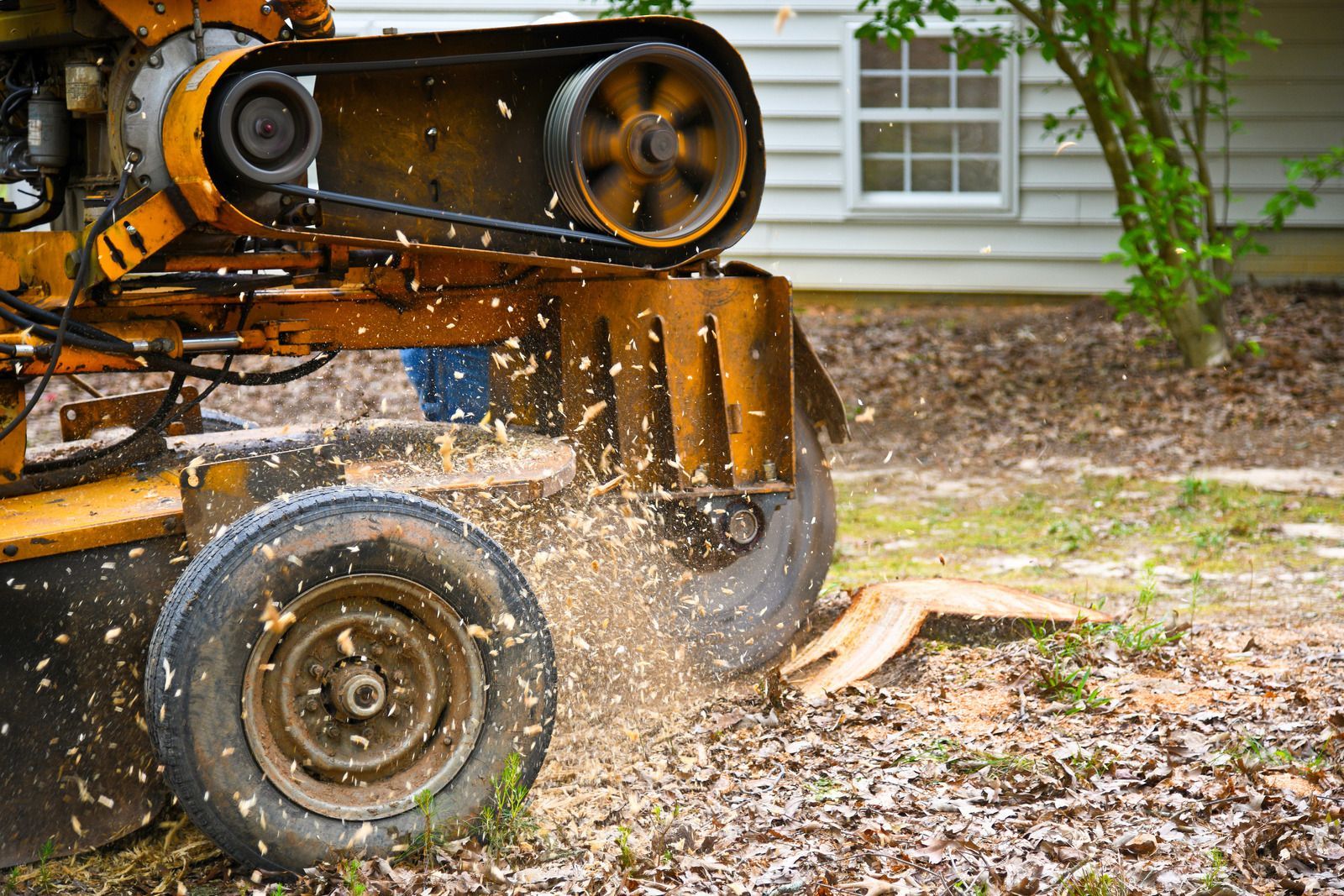
A stump grinder uses a spinning wheel of carbide teeth to chew the stump down into wood chips, working well below the soil line rather than just at the surface. Typical grinding takes the stump down roughly six to twelve inches below grade, which is deep enough to remove the root collar and the crown of buds that live there. Once that band of living tissue is gone, there is no growing point left. The lateral roots spreading out into the yard are still in the ground, but they have no bud-bearing collar to push new shoots from, so instead of regrowing they begin the slow process of decay. Those leftover roots typically break down over about five to ten years, feeding the soil as they go rather than fueling new trees.
That is the difference in one sentence. Cutting removes the shoots and leaves the factory that makes them. Grinding removes the factory. It is why grinding out a sprouting stump is a permanent fix while mowing it is a chore you inherit indefinitely.
Warning: Do not reach for weed killer to solve a sprouting stump near living trees or shrubs. Because suckers can share a root system with nearby plants, herbicide meant for the stump can travel through the roots and injure or kill trees you wanted to keep. Grinding removes the growing tissue mechanically, with no chemical moving through the soil to plants you care about.
What the Yard Looks Like After the Stump Is Ground Out
Once the sprouting stump is gone, you are left with a bed of wood chips sitting in and around the hole where the stump was. That grinding material is mostly chipped wood and soil, and it settles over time as the buried roots decay, which is why a ground-out spot can dip a little in the first year or two.
Most property owners have the crew pull out the bulk of the chips, backfill the hole with clean topsoil, and either seed or lay sod over it. If you want to replant a tree or shrub in the same spot, it is usually smarter to shift a few feet off the old center, since the decaying root mass can tie up nitrogen and crowd new roots for a while. The important thing is that with the root collar gone, you are landscaping over a spot that will not fight you by sending up a fresh thicket of shoots next spring.
New England conditions add a couple of wrinkles worth knowing. The rocky, glacial-till soil common across Worcester County and the Monadnock region means a grinder often has to work around embedded stones, and the same freeze-and-thaw cycles that heave rocks to the surface can leave a ground-out area needing a topsoil touch-up after the first winter. None of that changes the core result. The regrowth stops because the tissue that drives it is gone.
Frequently Asked Questions
Why does my stump keep sprouting even though the tree has been dead for a year?
Although the trunk has died, the underground root system often remains alive with stored energy. Dormant buds near the root collar continue producing new shoots until their reserves are depleted or the stump and root collar are completely removed through grinding.
Will the suckers eventually die if I just keep mowing them?
Yes, repeated mowing can eventually weaken the root system by preventing shoots from gathering energy through photosynthesis. However, this process often takes years, and allowing growth even briefly can restore energy, making stump grinding the much faster solution.
Which trees are the worst for sprouting from the stump?
Hardwood trees are the most aggressive stump sprouters. Red maple, oak, poplar, willow, elm, black locust, and cherry commonly send up vigorous shoots after cutting. Pines and most other conifers rarely regenerate this way, making hardwoods the usual persistent offenders.
Does stump grinding kill the roots that are already in the ground?
Stump grinding removes the stump and root collar where new shoots originate, preventing future sprouting. The remaining underground roots gradually decay naturally over several years, breaking down safely within the soil without continuing to produce unwanted new growth above ground.
How deep does a stump have to be ground to stop the sprouting?
Grinding typically extends six to twelve inches below ground level to remove the root collar containing dormant buds. Simply cutting the stump flush with the surface leaves those buds intact, allowing fresh shoots to emerge and the regrowth cycle to continue.
Can I plant grass or a new tree where the stump was ground out?
Yes. Remove excess wood chips, add fresh topsoil, and the area becomes suitable for grass seed or sod. When planting another tree, place it several feet away from the old stump to avoid decaying roots and encourage healthier long-term establishment.
The Real Reason the Shoots Keep Coming
A stump that keeps sprouting is not haunting you, it is running a survival program written into the wood. The buds at the root collar are alive, the roots below are full of stored energy, and every time you cut the shoots you leave both of those in place to try again. Mowing manages the symptom on the surface while the cause sits untouched underground. Grinding is the one approach that goes after the actual source, chewing out the collar and the crown of buds below grade so the leftover roots have nothing to grow from and quietly decay instead. That is the difference between a stump you fight every June and a patch of lawn you forget was ever there.
Have the sprouting stump ground out below the root collar — If your maple or oak stump keeps throwing up shoots every spring, cutting them will only invite the next flush because the living buds and stored energy stay in the ground. With 20
years of experience, Big Beaver Stump Grinding
grinds the stump and root collar six to twelve inches below grade to remove the exact tissue the sprouts come from, then clears the chips so the spot can be seeded, sodded, or replanted in Westminster, Massachusetts. Book a
stump grinding visit before another growing season recharges the roots and the thicket comes back thicker.